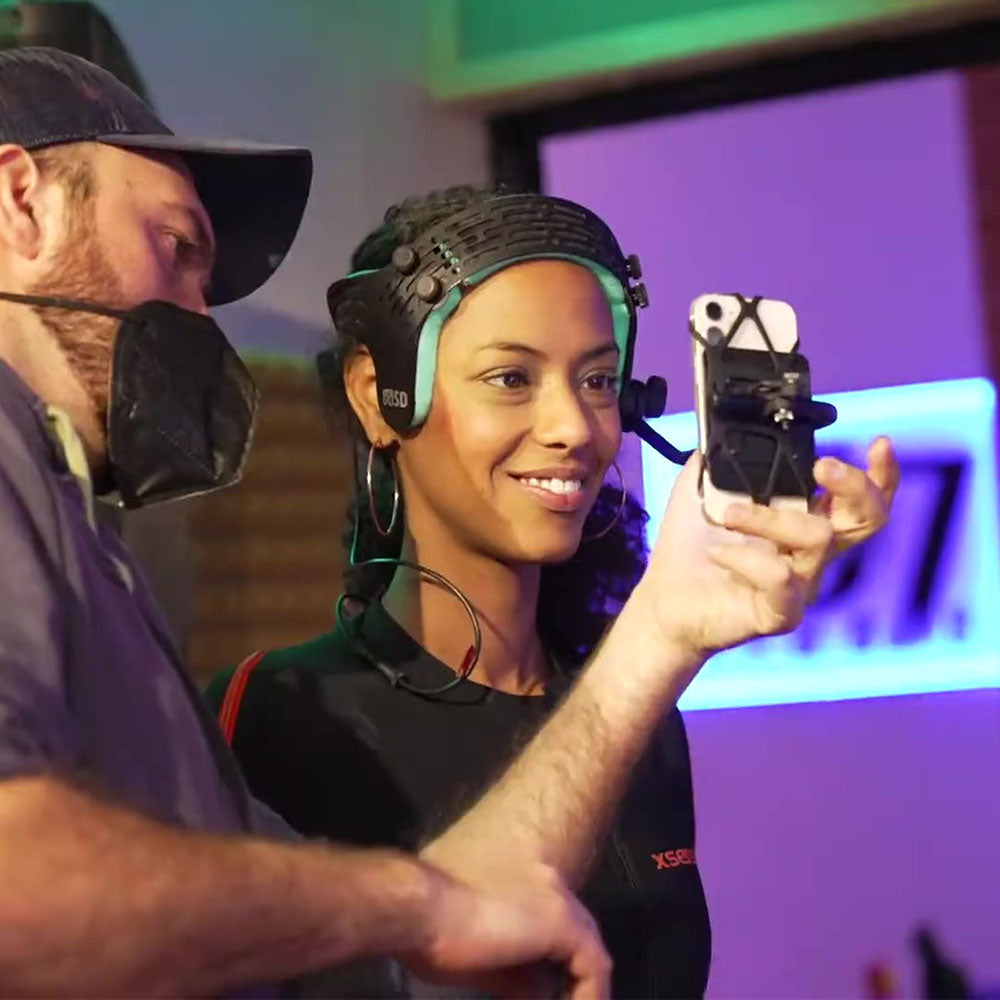
Top 10 iPhone Face Mocap Helmets (2026) – Expert Reviews & Comparisons
Looking for the best iPhone face mocap helmet? We’ve reviewed and ranked the top 10 facial motion capture headsets of 2026 for stability, comfort, price, and pro performance. Explore your best options below.
As facial motion capture technology continues to evolve, creators across film, gaming, virtual production, and live streaming are demanding more accurate, versatile, and lighter hardware. Whether you are a professional animator working on a blockbuster title or an indie developer building immersive experiences, choosing the right facial mocap helmet can significantly benefit your workflow. In this breakdown, we’ll take a close look at the leading options available, covering features, comfort, stability, and price — so you can find what best fits your creative needs and budget.
Table of Contents:
- Comparison Overview
- FaceCam iPhone HMC
- M2 Headcam by Mocap Design
- Headrig by Rokoko
- FaceMotionCapture Headrig by FaceMotionCapture
- Capi Helmet
- Yanus CAM IPHONE
- iPhone Headmount for Facial Capture by Creature Bionics
- Virdyn VDFace Capture
- Virdyn VDFace Pro Capture Helmet
- Cheapest MoCap Helmet?
- DIY Options
Comparison Overview
Different facial mocap helmets solve different problems. Some are acceptable for basic seated capture, but become less suitable for live performance, fast motion, shared performers, or multi-helmet production. Use the sections below to compare the helmets by production need.
Best for multi-person capture
For multi-person capture, stability comes first: a take is only as good as the data captured by the least stable helmet. A production-ready HMC must be fast and easy to put on and remove, quick to adjust without tools near the face, and stable across different actors, head shapes, hair types, and long sessions. It should allow natural facial expression, including jaw and forehead motion, while supporting hygienic shared use and reliable adjustment. The best systems are comfortable and lightweight, let talent drink or touch their face during capture and breaks, and allow mocap staff to swap phones or move helmets between performers quickly. Heavy, poorly balanced, or wobbly helmets create fatigue and neck strain that hinders performances and shows up in the recorded data. The helmet should not snag hair, and its foam or padding system should accommodate different hair lengths, thicknesses, and textures. Line of sight should not be blocked. For multi-performer work, exposed rods, sharp edges, and pointed, uncapped boom ends are real safety concerns: a nearby performer’s face or eyes should never be at risk because of another actor’s helmet.
| Helmet / HMC | Rating | Why it matters |
|---|---|---|
| FaceCam iPhone HMC | Strong | Lightweight, stable, comfortable, and fast to adjust, with broad head-conforming foam contact and two mix-and-match foam thicknesses for different head shapes and hair types. Hand-washable foam, durable conformable metal construction, a single boom with clear line of sight, and production-focused accessories make it the strongest fit for reliable multi-performer capture. |
| M2 Headcam | Limited | Capable accessory ecosystem, but numerous adjustments, heavier ABS construction, line-of-sight concerns, customer-reported durability issues, machine-washable foam concerns, expensive add-ons, and no listed counterweight system can make multi-helmet production more complicated. |
| Rokoko Headrig | Limited | Lower cost and lighter weight help, but limited foam-to-head contact, less secure stability, fixed-position counterweighting, and no clear foam replacement or washability support limit shared-use and multi-performer capture. |
| Yanus CAM IPHONE | Limited | Integrated lights and included balance weights are useful, but fixed weight choices, plastic construction, limited phone support, unclear foam washability or replacement, and a U-shaped boom that limits drinking or face access reduce production scalability. |
| FaceMotionCapture Headrig | Weak | Budget-friendly, but the heavy construction-helmet base, chin-strap reliance, narrow head-ring contact, non-washable contact points, and questionable stability make it weak for shared professional capture. |
| Virdyn VDFace Capture | Weak | Inexpensive, but the heavy closed-crown helmet, chin strap, likely non-washable foam, fixed counterweight, and questionable stability limit its usefulness for multi-person production. |
| Virdyn VDFace Pro | Weak | Above-head phone placement is interesting, but chin-strap reliance, mirror complexity, shipping time, unclear foam replacement or washability, and probable stability concerns weaken production suitability. |
Best for live performance
For live performance, the helmet should disappear into the show. It must stay stable, stay comfortable, keep the performer’s head cool, allow natural jaw and facial expression, and let talent drink or touch their face without removing the rig. Chin straps are a poor substitute for true helmet fit: tight enough to improve stability, they restrict expression and become uncomfortable; loose enough to tolerate, they allow the helmet to shift. A helmet that works for short, repeatable takes will fail onstage if it slips, blocks expression or line of sight, or interrupts the performance. Once the character is on screen, there is no take two — no one can stop to readjust a helmet. The show must go on. In live capture, wobble, readjustments, and uncanny-valley moments break the illusion. The result feels unreal — and not in a good way.
| Helmet / HMC | Rating | Why it matters |
|---|---|---|
| FaceCam iPhone HMC | Strong | Lightweight, stable, open-crown, and chin-strap-free, with broad foam contact, single-boom face access, washable foam, and optional counterweight / heat-sink accessories. Strongest fit for live capture where comfort, expression, hydration, cooling, and uninterrupted performance matter. |
| M2 Headcam | Limited | Capable accessory ecosystem, but heavier construction, chin-strap requirement for faster motion, line-of-sight concerns, adjustment complexity, and expensive add-ons make live performance use more complicated. |
| Rokoko Headrig | Limited | Lightweight and lower cost, with no chin strap, but top-strap reliance, limited foam contact, U-shaped boom, fixed-position counterweighting, and stability concerns reduce confidence for demanding live performance. |
| Yanus CAM IPHONE | Limited | Integrated lights and included balance weights may help some live setups, but fixed weight choices, plastic construction, limited phone support, unclear foam hygiene, battery weight, and dual-boom face-access limitations add live-performance caveats. |
| FaceMotionCapture Headrig | Weak | Low cost helps, but heavy construction-helmet design, limited head-conforming fit, likely wobble, non-washable contact points, and restricted face access make it weak for live performance. |
| Virdyn VDFace Capture | Weak | Inexpensive, but the heavy closed-crown helmet, chin strap, heat concerns, likely non-washable foam, long shipping time, and questionable stability weaken live-performance suitability. |
| Virdyn VDFace Pro | Weak | Above-head phone placement is interesting, but chin-strap reliance, mirror complexity, above-head weight, unclear foam hygiene, and fast-motion concerns make it a poor fit for live performance. |
Best for fast motion and gymnastics
Fast motion brings out the worst in most mocap helmets. Acrobatics, stunts, and rapid head motion demand precise helmet-to-head fit, head conformance, and stable camera-to-face registration. Straps are futile and uncomfortable. They are the wrong tool for the task: their inherent wiggle room guarantees bad capture data.
Balance is essential. The extra mass of a counterweight can help offset heavier phones during dialogue or slower movement, but during fast motion, that extra weight makes the helmet less stable. A well-balanced, precisely fitted lightweight helmet — ideally with a mini iPhone but no counterweight — is the best way to get usable facial motion capture during fast motion.
| Helmet / HMC | Rating | Why it matters |
|---|---|---|
| FaceCam iPhone HMC | Strong | Lightweight, head-conforming, chin-strap-free, and built around broad foam contact with a rigid single boom. Best suited for fast motion when fitted precisely, especially with a mini iPhone and no counterweight. Optional tunable counterweight helps slower movement, but can be removed when lower inertia matters most. |
| M2 Headcam | Limited | Designed as a serious system, but heavier construction, no listed counterweight, chin-strap requirement for faster motion, line-of-sight concerns, and adjustment complexity create important fast-motion caveats. |
| Rokoko Headrig | Limited | Lightweight and chin-strap-free, but top-strap reliance, smaller foam contact area, fixed-position counterweighting, and stability concerns reduce confidence for acrobatics, stunts, or rapid head motion. |
| Yanus CAM IPHONE | Limited | Open-crown-style design and included balance weights help, but fixed weight positions, plastic construction, dual-boom layout, battery weight, and limited phone support reduce confidence for fast-motion capture. |
| FaceMotionCapture Headrig | Weak | Heavy construction-helmet base, narrow head-ring contact, chin-strap reliance, limited bottom retention, and likely wobble make it weak for jumping, acrobatics, or rapid head motion. |
| Virdyn VDFace Capture | Weak | Heavy closed-crown helmet, chin strap, fixed counterweight, likely non-washable foam, and questionable stability create significant fast-motion concerns. |
| Virdyn VDFace Pro | Weak | Above-head phone placement reduces front weight, but chin-strap reliance, mirror complexity, above-head mass, and stability concerns make it weak for fast motion. |
Best for shared-use hygiene
When a mocap helmet is shared by multiple performers, the contact surfaces should be clean, even though the helmet is the same. Hotels reuse the pillows, but each guest gets clean pillowcases. A shared HMC should work the same way: same helmet, fresh foam where skin and hair contact the rig. Swappable or replaceable foam lets production reset the helmet between performers. That is basic hygiene. Cleaner, more comfortable shared use means performers can focus on what they do best: acting.
| Helmet / HMC | Rating | Why it matters |
|---|---|---|
| FaceCam iPhone HMC | Strong | Includes two foam thicknesses that can be mixed and matched for fit, comfort, and different hair types. Foam is hand washable, dries overnight, and optional spare foam lets productions reset the helmet with fresh contact surfaces between performers. |
| M2 Headcam | Weak | Foam components may be machine washable, but the website does not list spare foam or forehead pads. That makes same-day shared use harder, since washing/drying padding can introduce production delays. |
| Rokoko Headrig | Unknown | Foam washability and spare foam availability are not clearly stated. Limited foam contact may reduce sweat exposure, but it does not solve the shared-use question if the same contact pads are used by multiple performers. |
| Yanus CAM IPHONE | Unknown | Foam washability and spare foam availability are not clearly documented. Without clear replacement or cleaning support, shared-use hygiene remains uncertain. |
| FaceMotionCapture Headrig | Weak | Forehead and hair-contact areas appear difficult or impossible to wash, and no clear spare-padding system is listed. That makes it weak for shared professional use. |
| Virdyn VDFace Capture | Weak | Thick foam appears non-removable and non-washable. That creates obvious hygiene concerns when the helmet is shared by multiple performers. |
| Virdyn VDFace Pro | Unknown | Foam and sponge-pad details are inconsistent or unclear, and washability/replacement support is not clearly documented. Shared-use hygiene is therefore difficult to evaluate. |
Fit, straps, and jaw freedom
Believable facial mocap starts with natural expression. The performer needs to become their character despite the phone, helmet, and capture system. The HMC has one job: follow their head motion precisely while keeping the phone’s camera locked on their face. Some helmets rely on chin straps to compensate for a generic fit, but straps are the wrong solution. They’re always too tight, too loose, or both. They chafe, restrain, and distract: the performer suffers, or the helmet moves on the performer’s head. Either way, straps restrict jaw movement and facial expression, and compromise the captured performance.
| Helmet / HMC | Rating | Why it matters |
|---|---|---|
| FaceCam iPhone HMC | Strong | Broad head-conforming foam contact, ratchet adjustment, open-crown structure, and no chin strap let the helmet stay stable while leaving jaw motion, facial expression, and forehead movement free. |
| Rokoko Headrig | Limited | No chin strap helps, but the top strap, smaller foam contact area, and less head-conforming retention reduce confidence for demanding facial performance. |
| Yanus CAM IPHONE | Limited | Ratchet-style open-crown design helps, but plastic construction, limited head-shape conformance, and a dual-boom layout create fit, expression, and face-access caveats. |
| M2 Headcam | Limited | Multiple adjustments allow fit changes, but chin-strap use for faster motion, adjustment complexity, and line-of-sight concerns create performance caveats. |
| FaceMotionCapture Headrig | Weak | Construction-helmet suspension and narrow headband-style contact provide limited head conformance, making fit and facial-performance freedom weak points. |
| Virdyn VDFace Capture | Weak | Bicycle-style chin strap and closed-crown helmet design create comfort, jaw-motion, heat, and fit concerns. |
| Virdyn VDFace Pro | Weak | Rear elastic compression may help retention, but chin-strap use remains a facial-performance concern, and the mirror-based design adds complexity around the face. |
Counterweight and balance
Balance is about more than weight — it is about leverage. An effective counterweight system has to balance different phone weights, account for boom extension, and accommodate performer preferences. A heavy weight mounted on the back of the helmet has less leverage than a lighter weight positioned farther back, because offset determines how much balancing force the counterweight actually provides.
Most iPhone HMC counterweights are fixed or only crudely adjustable. FaceCam offers a 250g counterweight with adjustable offset and weight tilt, giving the operator much finer control over balance. Fixed counterweights are better than nothing, but they make a helmet heavier without truly balancing the phone. Non-removable weights create another problem: their mass is always there, even when it reduces stability during faster motion.
| Helmet / HMC | Rating | Why it matters |
|---|---|---|
| FaceCam iPhone HMC | Strong | Optional 250g counterweight uses adjustable offset and weight tilt for fine balance across different phones, boom extensions, and performer preferences. It can also be removed when lower inertia matters most. |
| Rokoko Headrig | Limited | Includes a removable 360g counterweight, but it mounts close to the back of the helmet with no meaningful offset or angle adjustment, limiting fine balance control. |
| Virdyn VDFace Capture | Limited | Includes a fixed 200g cantilevered counterweight, but mass, offset, and angle are not adjustable; because it appears non-removable, the extra mass remains even when it hurts faster motion. |
| Yanus CAM IPHONE | Limited | Allows zero, one, or two fixed 200g weights, which is useful, but the offset is fixed. That gives crude mass adjustment, not fine balance control for phone weight, boom extension, or performer preference. |
| FaceMotionCapture Headrig | Limited | Includes a counterweight, but it appears non-removable and non-tunable, adding weight without giving the operator fine control over balance. |
| Virdyn VDFace Pro | Limited | Mounting the phone above the head reduces the need for a rear counterweight, but above-head mass and mirror complexity create their own movement and comfort concerns. |
| M2 Headcam | Weak | No counterweight option is listed, leaving the phone's front weight less balanced, especially with heavier phones or longer sessions. |
Quick product summary
| Helmet / HMC | Main strength | Main limitation |
|---|---|---|
| FaceCam iPhone HMC | Stable head-conforming fit, washable/swappable foam, single-boom face access, and tunable accessories | Higher cost than budget or DIY options |
| FaceMotionCapture Headrig | Very low cost for an assembled helmet-style rig | Heavy construction-helmet base, limited fit conformance, and weak shared-use hygiene |
| M2 Headcam | Broad accessory ecosystem with GoPro, RealSense, iPhone case, light, and boom options | Heavy, costly add-ons, line-of-sight issues, chin-strap caveats, and no listed counterweight |
| Rokoko Headrig | Lower-cost, lightweight entry with no chin strap and included counterweight | Less tunable fit and balance, fixed-position counterweight, limited phone support, and unclear foam replacement/washability |
| Virdyn VDFace Capture | Inexpensive and includes a built-in counterweight | Heavy closed-crown, chin-strap design with hygiene, heat, and stability concerns |
| Virdyn VDFace Pro | Centers phone weight above the head using a mirror-based design | Chin strap, mirror complexity, above-head mass, and unclear foam/washability details |
| Yanus CAM IPHONE | Integrated lights and selectable fixed balance weights | Fixed offset, plastic construction, dual-boom limitations, battery weight, and limited phone support |
#1 - FaceCam iPhone HMC by Face.camera (Radical Variance)
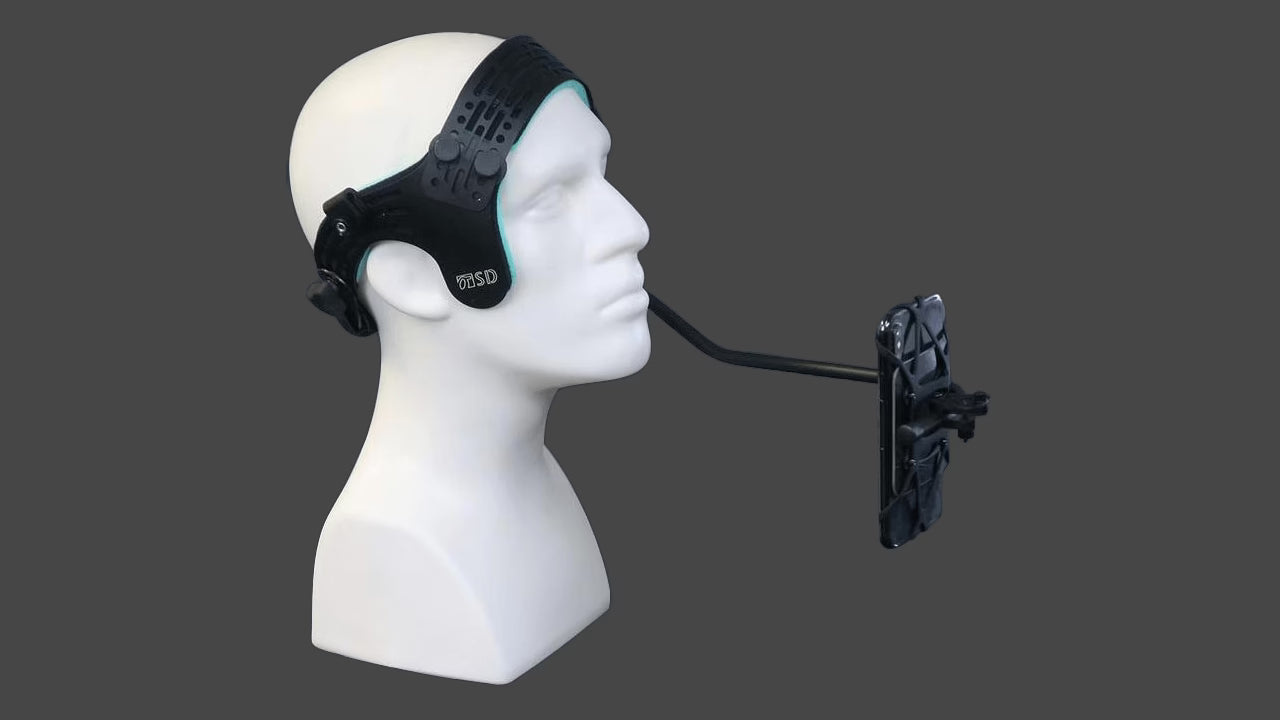
Standard Deviation won an Academy Award for their motion capture, AKA mocap, designs in 2020. The design of the FaceCam iPhone HMC facial motion capture helmet was based upon the same technology they developed for super high-end motion capture helmets used in numerous blockbuster movies and AAAA games.
Based upon its light weight, reliability, comfort, stability, durability, and ease of adjustment, several of our customers have purchased multiple helmets, (four to twenty-five units,) for use in high profile, mission-critical, multi-person capture situations such as:
- Silverspoon Animation’s Emmy-nominated live real-time performance facial motion capture used in Nickelodeon Super Bowl with SpongeBob SquarePants and Patrick Star (2024)
- Silverspoon Animation’s live performance motion capture for Fox TV’s Alter Ego (2021)
- Wave and Riot Games immersive Interactive Album performance capture Pentakill III: Lost Chapter (2021)
- Numerous live performances produced by a number of South Korean production companies.
Other important features:
- Our mocap helmet, hand made from special metal alloy parts, masterfully and comfortably surrounds the largest part of the performer’s head. It provides ideal conformance to the performer’s actual head shape. This is in contrast to plastic helmets which clamp, rather than fit, the performer’s head.
- Its open-crown design keeps performers' heads cool, while providing absolutely stable capture, even during gymnastic motions, without the need for uncomfortable, restrictive, chin straps.
- With FaceCam iPhone HMC, jaw and facial motion are never impeded, so performers can always speak and act naturally.
- The mocap helmet’s light weight and dual cantilevered optional counterweight support long facial mocap sessions without causing neck strain or unnatural head and body motions.
- The helmet’s boom arm, which holds the iPhone in front of the face, is made from a unique metal alloy that offers exceptional rigidity, while absorbing iPhone motion (relative to the head), thereby ensuring superior focal alignment between the iPhone’s TrueDepth sensor and the performer’s face.
- Supported by superbly designed, uniquely capable optional accessories.
The optional counterweight has a number of essential, one-of-a-kind, features:
- It can be tuned — The offset distance of the weight from the helmet can be varied to precisely balance any iPhone models, X and higher. The angle of the weight can be tilted up or down, according to the user’s preference.
- The orientation of the counterweight is in-line with FaceCam’s boom arm, which provides superior balancing of the weight of the phone.
Memory foam
- The included foam, (and optional spare foam) is provided in two thicknesses, so performers and mocap producers can balance performers' personal comfort needs, due to unique head shape and hair styles, and helmet stability.
- The two thicknesses of foam can be mixed and matched; for instance, performers with thick hair might benefit from using thinner foam behind their head, while using thicker foam on their forehead.
- Our proprietary foam is hand washable, and it dries overnight. Having spare foam on hand provides ideal hygienic conditions when the helmet will be worn by different performers on the same day: each performer can be fitted with fresh foam, rather than having to share foam that has recently been in contact with another performer’s face and hair.
Optional tracker mount:
- Allows placement of optical markers, inertial trackers, or Vive trackers above the performer’s head, which provides better occlusion resistance, and/or superior balance.
Cost: $1275
➤ Pros
- Extremely stable
- Lightweight
- Available options greatly expand its capabilities.
- Rigid lightweight single boom arm absorbs vibration and lets performers drink water or coffee without having to remove their helmet.
- Hand washable foam dries quickly overnight for hygienic capture, even when helmet will be shared.
- Rapid, responsive, service and support
- It is less expensive than Mocap Design’s M2 Headcam and Yanus Studio’s Yanus CAM IPHONE.
- Includes a one-year warranty on parts and labor
- 30-day return policy
- Toolless design, which protects performer’s eyes, face, and head
- Tightens with a single ratchet strap, with additional adjustments available for the utmost head-shape conformity.
- No protruding pointy edges
- Easily customized
➤ Cons
- It is more expensive than DIY helmets or competitor’s cheap helmets.
- Does not ship to certain countries: China, Russia, Nigeria, Cuba, etc.
#2 - M2 Headcam by Mocap Design

Mocap Design’s M2 Headcam, is made from ABS plastic, using 3D print on demand technology. A 2021 blog article on their website proclaims it is ‘the #1 iPhone Mocap Helmet’. A blog article from early 2023 claims it is ‘the most stable iPhone solution for VR and AR applications’. They offer camera cases for a number of GoPro models, which can support an outward facing camera for POV or environment footage from any angle, thanks to boom arm’s ability to ‘rotate and lock over a full 360-degree range’ though in theory a user’s neck and body would get in the way.
Cost: $1,699. Although listed as a sale price, that has been the de facto price since September 2022.
See our full comparison: M2 Headcam vs. FaceCam iPhone HMC
➤ Pros
- Innovative design: They obviously covered a lot of bases in making a 3D-printed mocap helmet.
- Camera case: Available for several GoPro models as well as Intel’s discontinued RealSense D415 30 fps rolling shutter scanning camera, in addition to iPhone models X through 14.
- LED lighting option:
- Can be positioned and swiveled along the helmet’s boom arm.
- LEDs run for 6 to 8 hours on a 9-volt battery.
- Boom arm tilt:
- Useful for environment capture.
- Optional Single Boom Arm:
- Can attach to either side of the helmet.
- Overcomes some of the inherent limitations of the M2 Headcam.
- Ships flat, for free shipping to most countries.
➤ Cons
- M2 Headcam cost is more than 40% greater than the price of FaceCam iPhone HMC.
- Most of M2 Headcam’s add-ons are quite expensive, as well.
- Design:
- Boom arm ends are not capped, which poses a risk of injury to nearby performers.
- Standard boom arm and its diagonal supports intersect the actor’s line of sight.
- Requires numerous individual adjustments to adapt it to different head sizes.
- Helmet removal is necessary for several of the helmet adjustments.
- Material — ABS Plastic:
- Heavy – M2 Headcam weighs about 2.5 times as much as FaceCam iPhone HMC.
- Potential durability issues: Several of our customers have said they initially purchased M2 Headcams. Unfortunately, their helmets broke during tightening within the first several uses.
- Camera Case:
- Each iPhone model requires purchase of a different camera case, at $95 apiece.
- iPhone models 15, 16, and 17 are not supported.
- LED lighting option:
- At $325, it increases the cost of the M2 Headcam by about 20%. Given this add-on’s components, it is mind-boggling how it could command such a high price:
- Two LEDs
- 3D-printed mounts
- Threaded bolts
- Connecting wires
- 3D-printed battery pack
- 9-Volt, non-rechargeable, battery
- Our solution? Spend $10-30 for an off-the-shelf USB-rechargeable iPhone ring light.
- At $325, it increases the cost of the M2 Headcam by about 20%. Given this add-on’s components, it is mind-boggling how it could command such a high price:
- Optional Single Boom arm:
- At $675, it increases the cost of an M2 Headcam by about 40%.
- It is an extremely expensive solution to allow talent to stay hydrated and/or caffeinated, without removing their helmet, and to bypass M2 Headcam’s inherent field of view limitations.
- No available counterweight option
- Weight of phone is unbalanced, which can cause uncomfortable neck strain, especially with heavier phones.
- Chin strap required for faster motions
- Chin straps inhibit jaw motion, resulting in stiff, inaccurate facial mocap recordings.
- Though necessary to improve stability during fast motions, your talent will find them especially uncomfortable.
- Foam padding and headband pad — website doesn't list spare foam or forehead pads
- Non-hygienic, if helmet is shared
- Need for machine washing can introduce production and scheduling delays
- No convenient options for attaching an above-head optical marker, or tracking devices, such as an Inertial Measurement Unit, Vive tracker.
- Warranty: None listed
- Return policy: None listed
- Last website update: Early 2023. Perhaps that explains why their order page includes a number of US-embargoed countries.
#3 - Headrig by Rokoko

Rokoko describes Headrig as ‘a lightweight, comfortable, and adjustable motion capture head mount designed to accommodate an iPhone.’ It offers a low cost of entry for face mocap with an iPhone. It does not require a chin strap, though it does utilize a strap on top of the head for increased downward stability. Includes a 360g counterweight. Viewed from the bottom, the shape of the helmet could be described as an oval that is flat on both long sides.
See our full comparison: Rokoko Headrig vs. FaceCam iPhone HMC
➤ Pros
- Flat rate worldwide $50 shipping
- 30 day return policy
- One year warranty
- Includes removable counterweight
- Tightens with a single ratchet strap
- No chin strap
➤ Cons
- Judging by the video on their website, the motion of the helmet, relative to the performers head, makes Headrig look to be slightly less than stable.
- The bent U-shaped boom that supports the camera holder looks a bit thin.
- The strap above the head wouldn’t be necessary if the Headrig had a more secure fit. Compare our dancer’s aerials and cartwheel, to see true stability in action.
- Not compatible with iPhone Plus and iPhone Max
- iPhone counterweight is not tunable:
- Its ability to utilize leverage is minimal: Though it is 44% heavier than the Counterweight for our iPhone HMC, it amounts to an ‘all or nothing’ scenario, since it attaches directly to the back of the helmet (back of head), without any offset.
- Lack of tunability prevents fine tuning of adjustments to suit various iPhone models. In contrast, our counterweight can extend up to about 8” back from the center of the helmet. Additionally, the weight part of our counterweight can be fine-tuned by tilting up or down.
- Headrig utilizes two smaller foam pieces above the ears and one cushion at the front of the head and one at the back. Headrig’s foam doesn’t look especially comfortable. There are gaps between the side pieces and the front and back pieces. These gaps could allow hair to get caught when the helmet is tightened or loosened.
- In contrast, the foam of the FaceCam iPhone HMC almost completely surrounds the head and even cushions the skin or sideburn area in front of the ear.
- FaceCam users can mix and match the two included foam thicknesses for superior comfort and fit.
- Provides approximately 50% less actual foam-covered support area than FaceCam iPhone HMC. Decreased contact with the head limits its stability.
- Rokoko’s website doesn’t mention foam washability or even spare foam. That raises issues of hygienics, since everyone that wears the same head rig would have the same non-swappable foam parts coming in contact with the skin on their forehead and their hair.
- Talent cannot drink water or coffee while wearing the Headrig due to the U-shaped boom arm.
- Does not offer any convenient option to attach an Inertial Measurement Unit, Vive tracker, or an above-the head optical marker.
#4 - FaceMotionCapture Headrig by FaceMotionCapture

If you are thinking of building a DIY mocap helmet, you might want to think twice, since the FaceMotionCapture Headrig, made in the UK, sells for roughly $160-$185 when shipped to the United States. (Of course, that price will fluctuate based upon currency conversion rates from GBP to your local currency as well as importation rates.)
One of its reviewers described it as a ‘3D printed part and a classic construction helmet.’ If that is all your budget can afford, this might be a good choice for you. It could save you from investing the time and effort to come up with your own design, sourcing the needed parts, prototyping your DIY helmet, and continually iterating your design.
➤ Pros
- Budget price.
- The 3D printed boom looks to be decently designed.
- Includes a counterweight.
- Tightens with a single ratchet strap.
- No chin strap.
➤ Cons
- Heavy. Construction helmet + 500g + 3D-printed boom arm, it probably weighs at least 50 to 60% as much a motorcycle helmet. Counterweight does not appear to be removable. Heavy weight of helmet will affect body performance, since the neck will be supporting greater weight than normal.
- Though supported from above by the construction helmet straps, there isn’t anything supporting attachment from the bottom. If a performer jumps, the helmet will probably lift slightly at the apex of jumps, especially if the performer has thick hair.
- Minimal adjustability for snugness by tightening the ratchet strap against the performer’s skull.
- Perhaps not especially stable, even when ratchet wheel is super-tight. The more hair someone has, the less stable their face mocap will be.
- The performer's line of sight may be obstructed.
- The helmet plus boom is a lot bigger than a person’s head. That will definitely affect the way the actor moves their head, and even their body. The greater size will increase occlusion when used with optical body tracking.
- There is not that much actual contact with the head. It has a narrow headband-type ring assembly that tightens via a ratchet strap. Beyond that, it is supported from above by the helmet’s three internal straps.
- The parts of the helmet that contact the forehead and hair are not washable; therefore, sharing of the helmet is unhygienic.
- This helmet is liable to wobble, even more so with faster motions, based on the weight of the helmet and counterweight.
- There is no convenient option for attaching an above-head marker, for optical tracking, or IMUs or Vive trackers.
- Counterweight appears to be non-removable, when helmet is used with lighter, mini-iPhones.
- Counterweight is not tunable — adjustable. It cannot be moved farther from the head for greater leverage, when used with heavier phones: It is not cantilevered.
- Performer needs to remove helmet to drink water or coffee.
#5 - Capi Helmet

Availability note: The Capi Helmet product page remains online, but the helmet is currently listed as sold out and appears to have had limited availability for an extended period. That makes it hard to treat as a practical current option for productions that need to buy, replace, or scale multiple helmets.
Human Dynamo Workshop, the creators of the Capi Helmet, for iPhone, indicate they designed helmets for Weta FX and Faceware Technologies. The company, based in New Zealand, seems to have a slick sense of design and advanced fabrication capabilities. Their portfolio shows prop pieces that were used on set in the filming of a number of movies and television shows. They have also done fine arts pieces, worked on creating interior environments, and have created retail and commercial spaces.
The Capi helmet has a slick appearance and their website makes some broad claims about its capabilities; however, it’s difficult to tell how serious of an offering their product actually is. For one thing, both of the helmets on the website have been listed ‘out of stock’ for many months. Additionally, the actual appearance of the Capi helmet shown on the website widely varies. Is it finished in blue, or in red, or is the helmet's surface simply unfinished? Does their website show actual photographic images and videos or merely 3D renderings and animations?
➤ Pros
- Intriguing looking design — slightly reminiscent of a wrestling helmet.
- Interesting concept
- Designed to fit a wide range of head sizes
- Breathability claims
- Helmet adjustment apparently does not require use of tools near the face, judging by the pictures / renderings on their website. (Adjustment details are scant.)
- Supports use of GoPro and RealSense cameras, in addition to iPhones. (Their website doesn’t indicate how non-iPhone cameras are attached and secured.)
➤ Cons
- Their website launched in February 2023. It is difficult to tell ‘how real’ their helmet actually is, or when it might actually be available, since it has continually been listed as ‘out of stock’ or ‘sold out’ for a long time. That would seem to pose a challenging situation for any of their customers who wish to add additional helmets for a production.
- There are a lot of impressive designs, prototyping, developments, and installation work that Human Dynamo Workshop is involved in. Unfortunately, manufacturing and supporting a professional / prosumer product for sale does not seem to be part of their existing core competencies.
- Their helmet does not offer a counterweight option; therefore, helmet wearers may experience neck strain or unnatural head movement while recording, especially when used with heavier iPhones.
- Their website is short on actual specifications such as weight, washability of foam, availability of replacement foam.
- Talent cannot drink water or coffee while wearing helmet, due to its U-shaped boom arm.
- Though their helmet claims to be breathable, the helmet is not an open-crown design. There are parts of the helmet that will trap heat, even if other parts are open to the air.
- Requires the use of a chin strap, which would need to be tightly fastened to achieve the necessary stability. Chin straps are something that people who wear face mocap helmets find chafing and uncomfortable. Using a chin strap can restrict jaw motions.
- Website does not mention warranty.
- Website does not mention availability of spare / replacement padding. Though helmet padding is said to be washable, there is no mention of how that is actually done.
- The outward facing, non-recessed nuts on the forehead piece look a bit sharp. This might pose a hazard for fellow performers.
#6 - Yanus CAM IPHONE

The name of this product is an interesting combination of letters and sounds that might strike some as a bit colorful.
The Yanus Cam iPhone is mostly plastic and includes a U-shaped iPhone support. It includes lights on either side of the camera and two 7.3V batteries to power the lights, as well as a dual charger. Presumably one battery can be kept charging while the other is being used in the helmet. The helmet also includes a counterweight of sorts that can hold one or two 200g balance weights — included. The helmet can accept iPhone models 13 through 16.
Cost: $1450, plus $250 for shipping to most destinations
➤ Pros
- Features an open-crown design and temple pieces — reminiscent of FaceCam iPhone HMC.
- Includes lights with adjustable brightness
- Includes two optional balance weights
- 12 month limited warranty.
➤ Cons
- iPhone 12, which has a vastly superior TrueDepth sensor, cannot be used with this helmet.
- It is mostly made of plastic, a material that flexes where it shouldn’t and doesn’t flex or dampen motion where it should.
- The plastic helmet minimally conforms to shape of the user’s head; therefore, the ratchet on the helmet needs to be extremely tight for stability.
- Aside from choice of using one or two weights, the counterweight is not at all tunable or adjustable.
- Non-adjustable weight position of counterweights does not balance various iPhone models adequately. Essentially, their weight system offers users a choice of no weight, one weight, or two weights. That’s only three choices for a wide range of possible iPhone model weights and boom offsets. Users end up with either too much or too little weight to offset the weight of the phone they are using.
- Counterweight is not aligned with the iPhone support boom. As a result, it does not impart as much stability as it otherwise could.
- The dual boom design does not allow the talent to drink water or coffee without removing their helmet, which can cause delays.
- Helmet has a number of pointy or angular edges.
- The plastic used in the boom arm is potentially less stable than the high-grade motion-damping aluminum alloy boom arm used in iPhone FaceCam HMC.
- Their website is a bit of a labyrinth, and the English version of the site has more Korean text than is helpful to people who do not read Korean.
- Website has no mention of spare foam or washability. All users will end up sharing the same foam day after day, which makes for poor hygienics.
- Battery increases helmet weight, which can reduce comfort and stability of helmet.
- Shipping is expensive, and it can take a long time: Shipping a single helmet from S. Korea anywhere in the world, even South Korea, costs $250 and takes up to 14 days.
#7 - iPhone Headmount for Facial Capture by Creature Bionics

Availability note: The Creature Bionics iPhone Headmount appears to be discontinued or no longer actively listed for sale. Creature Bionics still makes impressive mocap actor props, including creature-performance extensions and related gear, but this specific iPhone facial-capture headmount does not appear to be a current product.
Developed by Ace Ruele, a talented actor, mocap actor, stunt performer, and mocap actor workshop leader. He has contributed motions to a number of movies, television shows, and games. His company, Creature Bionics, has developed a number of unique and enabling stilts / extensions, tails, monster legs, and monster feet that let mocap actors record motions for quadrupeds, monsters, and other creatures. In addition to being popular for use in mocap shoots, a number of purchasers have made good use of these ‘functional prosthetics for cosplay.
One could be forgiven for assuming the iPhone Headmount for Facial Capture device is a clone of our FaceCam iPhone HMC. The helmet claims to be a “lighter weight design”, with a listed weight of “only 362 grams”. Purchase of a separate Quad Lock case adds about $40, plus shipping, to the overall purchase price.
➤ Pros
- Selectable U-shaped ‘Full Bar’, instead of a ‘Single Bar’
- About 32% cheaper than iPhone HMC
- Free shipping
- The end of the Full and Single Bars has plastic caps for safety, same as with FaceCam iPhone HMC.
- 3 points of adjustment
➤ Cons
- Uses a neck strap, as well as another strap, above the head. Straps should never be necessary with a well-designed helmet such as FaceCam iPhone HMC: Stable and comfortable facial motion capture requires a helmet that accurately can flex to accommodate the head, rather than clamping to it then binding to it with straps. Anyone who has performed while wearing a mocap helmet will attest that neck straps are hugely uncomfortable and can never be tightened enough to eliminate wobble, which is only made worse by reliance upon above-head straps. Users that desire a high degree of capture fidelity will surely bypass relying upon the need for top and bottom straps, especially while performing acrobatics and other dynamic, gravity-defying, motions.
- Dubious stability, as clearly displayed in the video shown on the Etsy site.
- Listed specs for helmet weight are inconsistent, ranging from “300 grams including case” to “362 grams”, with no mention of the weight of the case.
- Heat will be trapped by the Quad Lock iPhone case, or any case, used in conjunction with an iPhone. While not a problem for the majority of iPhone uses, that’s especially problematic during long capture sessions: The longer the iPhone captures video, non-stop, the more heat will build up due to rapid battery discharge. Hot iPhones suffer from a decrease in overall battery life. During real-time capture, the iPhone’s performance will stutter and become unreliable until the phone cools down sufficiently.
- Helmet materials are listed as plastic and steel. Apparently, this helmet does not utilize any advanced metal alloys. Aside from the indicated points of adjustment, the helmet does not seem to offer any conformance to fit the contours of various performers’ heads, unlike FaceCam iPhone HMC.
- Using steel single or full bar booms does not offer any motion damping, unlike the boom (arm) on the FaceCam iPhone HMC.
- It is unclear what the added benefit of the ‘Full Bar’ is, given the helmet’s use of top and bottom straps. If anything, that design would make the bar more rigid, further limiting its ability to absorb motion of the phone relative to the head.
- No counterweight option is available: there is no way to balance or adaptively tune or compensate the weight of heavier iPhones. Even when using iPhone 12 mini, the lightest TrueDepth enabled iPhone, a properly adjusted counterweight still works wonders to reduce neck muscle strain.
- Case:
- Requires an extra purchase — approximately $40
- Adds approximately 60 to 85 g to the weight of the helmet
- Reliance on neck and top of head chin straps seems to limit ideal positioning of the helmet, relative to the head, as shown in the above picture. Surely, this limits how well the helmet can capture expressions and emotions, given how expressive human eyebrows are.
- Returns and exchanges are not accepted.
- Helmet has far fewer points of adjustment than iPhone HMC
- Memory foam:
- Thickness is unspecified
- There is no mention of washability, which suggests potential hygiene issues when the helmet is shared.
- There is no mention of spare foam availability, which presents further hygienic concerns.
#8 - Virdyn VDFace Capture

The Virdyn VDFace Capture — Shenzhen Omni-In, is a pretty basic helmet plus iPhone holder. The helmet part includes some ventilation holes, although it is not an open-crown design. Includes a built-in, cantilevered, non-removable 200g counterweight. The offset and the mass of the weight is not adjustable. Supports iPhone X and above.
The helmet has thick foam which appears to be non-removable and non-washable. Users must wear a bicycle-style chinstrap.
The helmet apparently is made from polycarbonate plastic and nylon. The boom is made from aluminum alloy. The helmet comes in two sizes: Large fits heads with a circumference that ranges from 54-62cm. Medium fits heads with a circumference that ranges from 51-59cm.
Virdyn’s website indicates it includes Virdyn's own VDLiveFC iPhone app, which looks to be based on ARKit’s 52 blend shapes, and seems primarily geared towards simple real-time animation. The app is actually a free download from the iPhone app store, so anyone can use it, apparently without cost. All the text in the app is in Chinese, but users can perform screen captures of the app, then use Google translate to decipher the instructions and menu titles.
Cost: $559 if purchased on Virdyn’s website. $310 plus approximately $14 for shipping if purchased on Alibaba. Shipping takes about a month.
➤ Pros
- Inexpensive
- Includes cantilevered counterweight which is in the same plane as the boom arm, for greater stability.
- Includes a one-year warranty.
➤ Cons
- Requires use of a chin strap which can be uncomfortable to wear, even though it is made of elastic, — apparently. Use of a chin strap ultimately limits freedom of jaw motion and expression.
- The elastic of the chin strap will undoubtedly stretch out, over time, eventually needing to be replaced. There is no mention on the website how to obtain or reattach replacement chin straps.
- The helmet weighs 750g, which is about three times as much as the iPhone HMC, or about 50% more than iPhone HMC plus Counterweight.
- The offset of the fixed, non-removable counterweight limits the ability to offset the weight of various TrueDepth enabled iPhones. The actual weight of the counterweight is about 20% less than the tunable counterweight on the FaceCam.
- Closed crown helmet will make the actor’s head feel hot, even with the ventilation holes in the helmet.
- Foam appears non-removable and non-washable, which raises hygienic concerns when the helmet will be used by more than one performer.
- It would probably be difficult for actors to drink water or coffee without removing the helmet.
- Shipping time is particularly long.
- Working with a company based in China can be challenging if one doesn’t speak Chinese, or the same dialect.
- Not a good choice for tracking facial expressions during rapid or acrobatic motions, since such conditions would exceed the helmet’s stability capabilities.
#9 - Virdyn VDFace Pro Capture Helmet

The design of the VDFace Pro helmet — Shenzhen Omni-In, seems very similar to Noitom’s seemingly discontinued Perception Face Capture Helmet. It has a mount for an iPhone on top of the head and includes two front surface mirrors. The small mirror, close to the phone’s TrueDepth sensor, projects the structured light pattern from the sensor’s LED dot projector onto a larger mirror that is angled towards the face. The mirror is positioned where other iPhone mocap helmets mount their cameras. This mirror bounces the structured light pattern back to the smaller mirror near the TrueDepth sensor, which reflects the pattern back onto the TrueDepth sensor, for tracking of facial expressions.
Unlike the VDFace Capture helmet, which is completely lined with thick foam, their website indicates this helmet includes a piece of patterned foam, although another part of the same page mentions foam of various thicknesses. The helmet cinches in the back, with an elastic strap which compresses the helmet a bit, causing the helmet and foam to grip the head more tightly. There is no indication on the website whether the foam is washable, or replaceable, which raises potential hygienic issues.
Cost: $504.00 if purchased on Virdyn’s website. $388 + $10 shipping at AliExpress. Shipping takes 3 to 4 weeks.
➤ Pros
- Mounting the phone above the head centers the weight of the phone, which eliminates the need for a counterweight.
- Compared to their VDFace Capture helmet, their Pro Capture Helmet appears to be somewhat more breathable.
- Unlike the VDFace Capture helmet, their Pro Capture Helmet can accommodate different head sizes. It is unclear what role “sponge pads of different thicknesses to accommodate different head sizes” plays in the role of fit, since the parts list on the website only lists a single sponge pad.
➤ Cons
- Though the website describes the helmet as lightweight, @ 395g, that is still 65% heavier than FaceCam iPhone HMC. Though the FaceCam plus Counterweight weighs about 75% more than this helmet, it is far more stable, and the tunability of the FaceCam’s counterweight does an excellent job balancing the weight of the phone, rather than offsetting that weight above the head. Above-head offsetting probably makes the helmet less stable, less comfortable, and likely affects the performer’s head movements.
- Performer will probably need to remove helmet to drink water or coffee.
- Requires use of a chin strap which can be uncomfortable to wear. Use of a chin strap ultimately limits freedom of jaw motion and expression.
- Although mounting the helmet above the head might seem to eliminate issues with the offsetting the phone in front of the face, it will ultimately affect head motion since it makes the head heavier. Above-head mounting likely compromises stability and comfort when the performer moves quickly.
- Though the helmet appears to be more breathable than the Virdyn VDFace Capture helmet, it will still trap heat, even with the ventilation holes on the helmet.
- Working with a company based in China can be challenging if one doesn’t speak Chinese, or the same dialect.
- Not a good choice for tracking facial expressions during rapid or acrobatic motions, since such conditions would exceed the helmet’s stability limits.
- Shipping time is fairly long
#10 - ¢heapest

On Aliexpress if you search for some combination of the following: ‘Phone Head Mount Smartphone Strap for Vlog Recording Mobile Phone Holder Outdoor Sports First-person View Video for Iphone’, sold by Electric Hunters Store, there’s a strap-based head mount for a phone.
It looks like it might support portrait mode. Will it work for face motion capture with an iPhone? Is it a helmet at all? Maybe, maybe not, but it’s ever so cheap: roughly $12, with free shipping.
➤ Pros
- So cheap!
- Should arrive in one or two weeks
- Cheap! You can probably find the necessary change in your couch.
- If it doesn’t allow portrait mode, you can probably rig some attachment that will facilitate that.
- You can probably turn it into part of a Halloween costume if it doesn’t fit your requirements for a cheap mocap helmet.
➤ Cons
- May lack adequate stability.
- Elastic may not support your iPhone very well. Best use case would probably involve iPhone 12 mini or iPhone 13 mini.
- Elastic will eventually weaken, though anyone who is handy can probably rig their own replacements for the elastic, once it over stretches.
BONUS: DIY Motion Capture Helmets

There are plenty of ways one can build an iPhone helmet ‘on the cheap’, if one has plenty of time and an old helmet of some sort lying around. You can certainly find a lot of designs and suggestions by Googling ‘DIY mocap helmet’ or searching on YouTube.
Cost: ¢heap
➤ Pros
- Cheap
- Great for tinkerers or dedicated recyclers with plenty of time
➤ Cons
- Performance and capture results will invariably be lacking, compared to commercially available products.
- Likely to require uncomfortable chin straps
- Ultimately heavier than would be ideal
- Dubious stability
- Potentially undurable
- Not useful for fast motions
- Non-hygienic if shared
- Effective counterweight is challenging to engineer
FAQ – iPhone Face Mocap Helmets
What is the best iPhone face mocap helmet for professional use?
The FaceCam iPhone HMC is widely recognized for its stability, comfort, and optional tunable counterweight system.
Are there budget options for iPhone facial motion capture?
Yes. Devices like the FaceMotionCapture Headrig or even AliExpress strap mounts offer extremely low-cost alternatives — but they sacrifice stability, accuracy, comfort, and hygiene.
Do I need a chin strap for iPhone facial mocap?
Many low-cost helmets and even expensive helmets use chin straps, but they limit jaw motion. FaceCam iPhone HMC never uses a chin strap. It doesn't have to. It fits the head extremely well and even conforms to the head, rather than clamping it.
Conclusion:
If you're recording from an iPhone, your best bet for professional quality is going to be our FaceCam iPhone HMC - built by Radical Variance based upon the same technology Standard Deviation developed for super high-end motion capture helmets used in numerous blockbuster movies and AAAA games.
If the FaceCam is out of your price range, you might consider one of the other cheaper helmets shown here, but be mindful of stability, weight, comfort, and safety.

Our Recommendation
Looking for a professional-grade solution? Check out the FaceCam iPhone HMC - used in Emmy-nominated productions and AAA games.
Professional iPhone Facial Motion Capture Headset (HMC) – FaceCam | MetaHuman / Live Link Face
$1,275.00